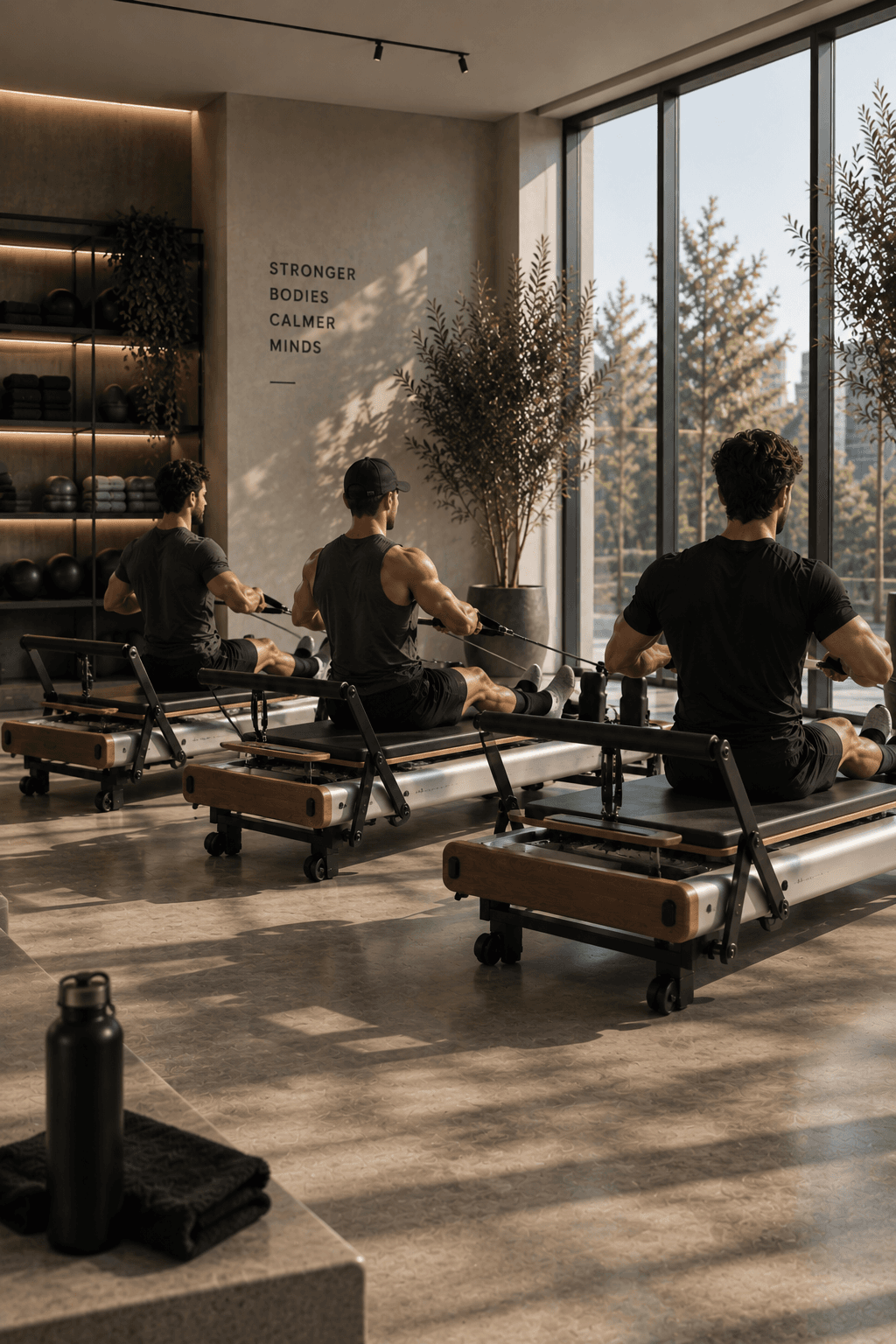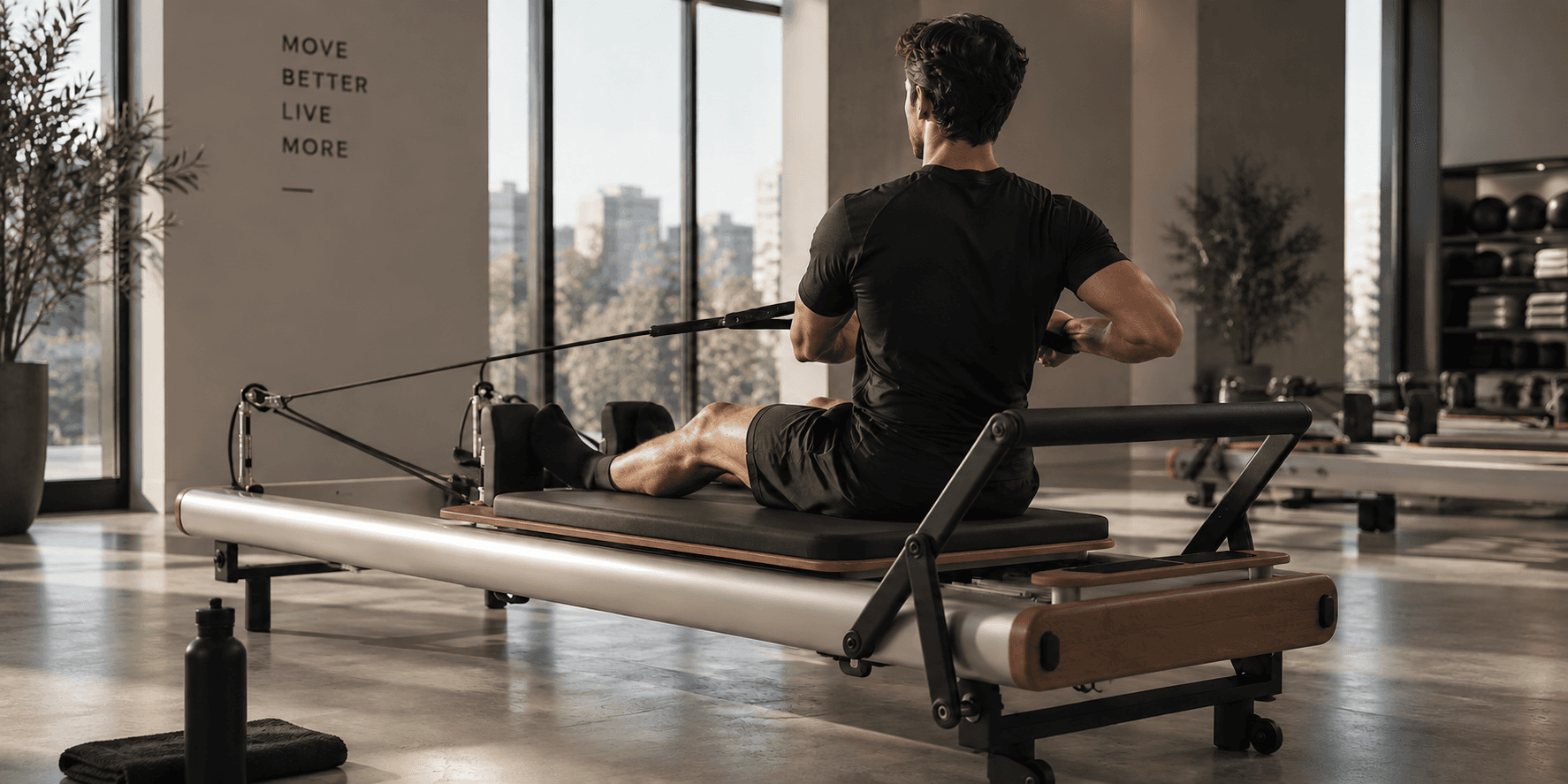
Reformer strength training is built on resistance, not gravity: the machine's springs load your muscles through a full range of motion, in directions a barbell rarely challenges. That's why men who add reformer sessions to their week consistently report their heavy lifts feel more stable, not less.
The strength you build on a reformer is functional by design: hips, shoulders and spine working together under control, rather than a single muscle group in isolation. It's the kind of strength that shows up when you're moving furniture, playing with your kids, or bracing under a heavy squat, not just the kind that shows up on a lifting chart.
For most men, reformer Pilates isn't a replacement for the weight room. It's the missing piece that lets the weight room work better: correcting the small imbalances that heavy, repetitive lifting patterns create over time.
Ready to feel it for yourself?
Find a men's-friendly reformer class near you.
Questions men ask about strength.
Straight answers to the most common questions about how reformer Pilates builds strength, so you know exactly what to expect before your first class.
It builds real, measurable strength. The spring resistance loads your muscles through a full range of motion, and that resistance increases as studios progress you to heavier settings, the same way you'd progress weight on a barbell.
No. Muscle size comes mainly from heavy lifting with progressive overload and a calorie surplus. Reformer work builds lean, functional strength and control, it complements a bulking or cutting phase rather than driving one.
They train strength differently. Weights build maximal force output in a fixed plane, reformer work builds strength through full ranges of motion and under constant tension, which is why the two combine so well.
No. Every reformer class is adjusted by spring tension, so a total beginner and an advanced lifter can be in the same class working at their own level.
Most men notice a difference within 2 to 3 sessions a week over 4 to 6 weeks. Consistency matters more than frequency, one class a week done for months beats five classes crammed into two weeks.
Indirectly, yes. Reformer training strengthens the stabilising muscles around your hips, shoulders and spine that support heavy lifts, many men report their big three lifts feel more stable and controlled after adding reformer sessions.
Nearly all of them work together: glutes, hamstrings, deep core, shoulders and upper back are hit hardest, since most exercises demand full-body coordination rather than isolating one muscle.
It can be, especially for general strength, injury prevention and long-term joint health. If your goal is maximal size or one-rep max numbers, pairing it with a lifting program will get you there faster.
Most men feel a difference in control and stability within the first 2 to 3 classes, visible strength gains typically show up over 6 to 8 weeks of consistent training.
No equipment or experience needed. Studios provide the reformer machine and instructors adjust resistance and coach form for complete beginners in every class.
Yes. Reformer work isolates and challenges weaker or under-used muscles that heavy compound lifts tend to skip, which is exactly what corrects the small imbalances that build up over years of training one way.
More reasons men do Broformer