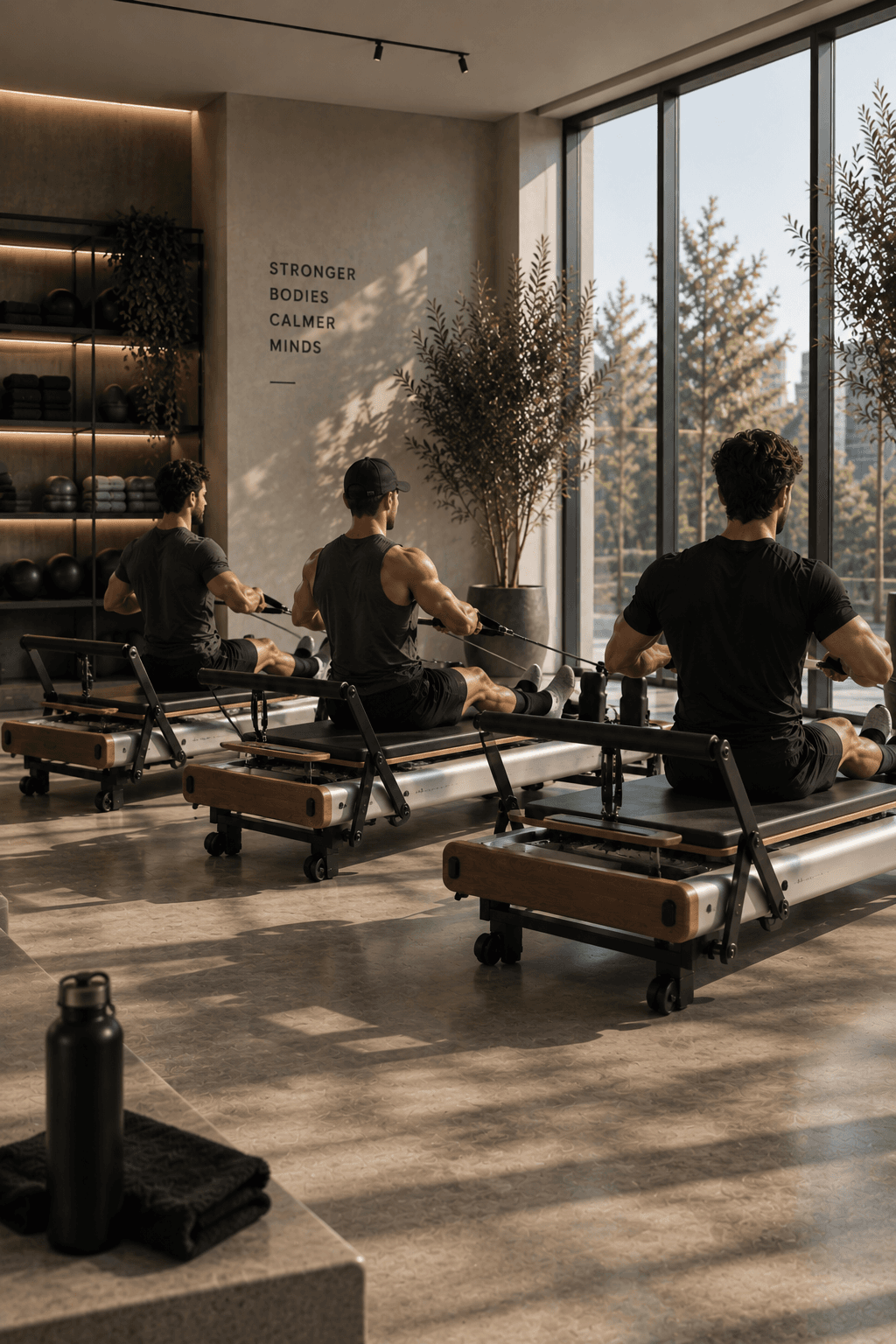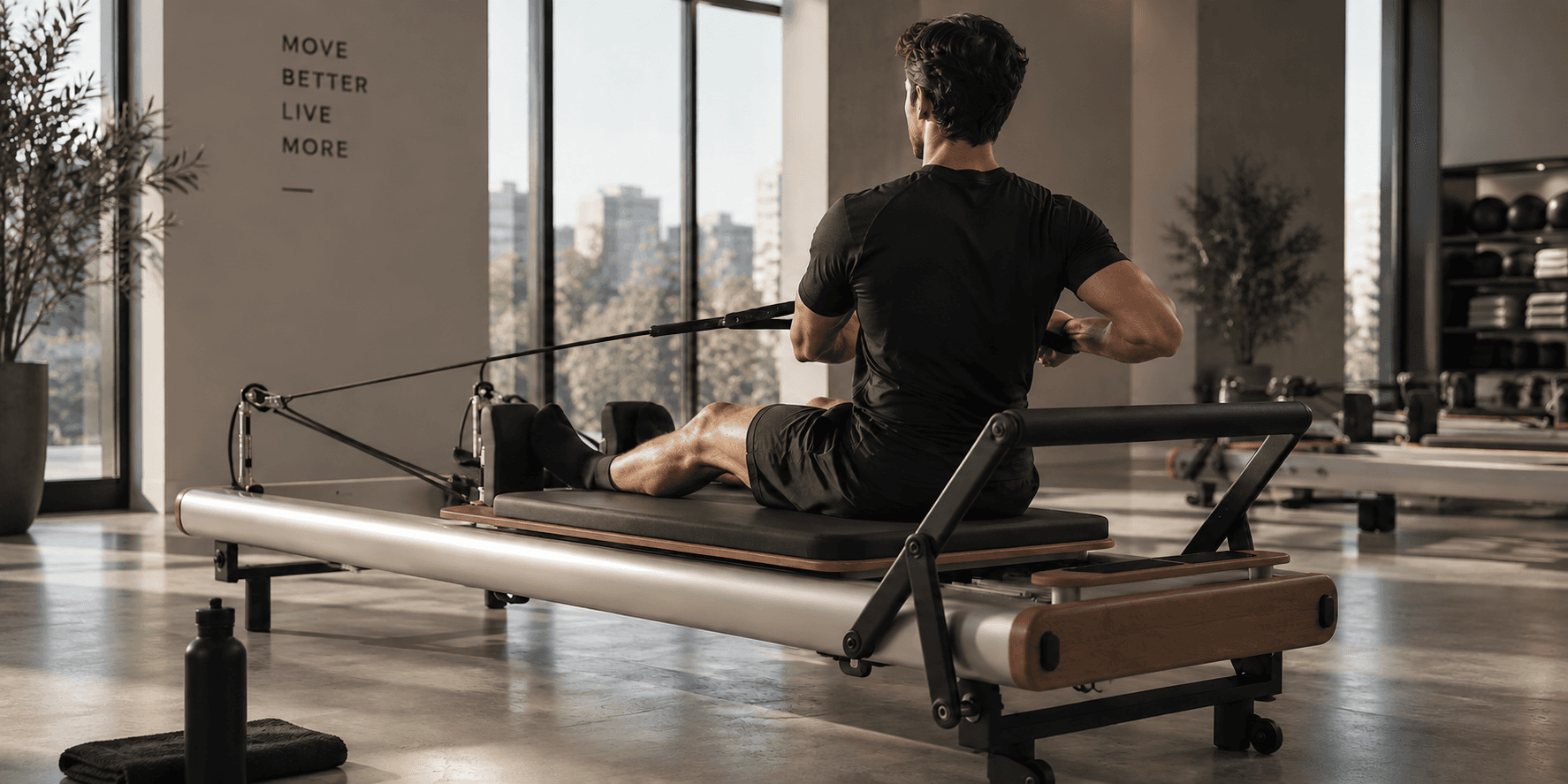
Mobility is different from flexibility: it's not just how far a joint can move, but how much control and strength you have throughout that range. Most men have plenty of raw flexibility in isolated stretches: what's missing is control at the end ranges that actually matter under load.
A reformer builds exactly that. Every movement is resisted and controlled through the full range, which trains your body to own positions it could previously only pass through. That's why men who've never held a stretch in their life often see the biggest mobility gains from reformer training, it's active, not passive.
The payoff shows up everywhere: deeper squats, safer overhead positions, hips that open instead of pinch. Mobility work doesn't need to feel like yoga to work: it just needs resistance in the right places.
Ready to feel it for yourself?
Find a men's-friendly reformer class near you.
Questions men ask about mobility.
Straight answers to the most common questions about how reformer Pilates builds mobility, so you know exactly what to expect before your first class.
Flexibility is how far a joint can passively move, mobility is how much strength and control you have through that range. Reformer training builds both, but its real strength is building control at end ranges under load.
For most men, yes. Tight hips are usually a control problem as much as a tissue problem, reformer exercises load the hips through full ranges of motion, which teaches your body to trust and own that range instead of guarding it.
Static stretching is passive, you hold a position and wait. Reformer mobility work is active and resisted, you're building strength while you build range, which tends to produce faster and more durable results.
Often, yes, though check with your physio or doctor for anything recent or acute. Reformer training is low-impact and fully adjustable, which makes it a common recommendation for rebuilding range and control safely after injury.
Many men feel looser and more controlled after their very first session, visible changes in range of motion, like squat depth or shoulder overhead position, typically build over 4 to 8 weeks.
Not at all. Reformer classes are built for men with limited starting range, spring resistance and instructor coaching adjust to wherever your body is on day one.
Yes. Deeper squats, safer overhead positions and hips that open properly under load all depend on mobility, most men who add reformer training report their main lifts and sport movements feel noticeably more controlled.
No, mobility work matters at every age. Younger men benefit from better performance and injury prevention, older men benefit from maintaining independence, the training itself doesn't change with age, just the reason you're doing it.
It comes down to resistance. Yoga builds range mostly through bodyweight and gravity, reformer springs add resistance through the same ranges, which many men find builds trust and control faster because it feels more like training than stretching.
Two sessions a week is a solid baseline for noticeable change, even one consistent weekly class will improve mobility over a few months compared to no dedicated mobility work at all.
Yes, and it's one of the most common combinations. Many men use reformer sessions on rest days or lighter training days specifically to keep hips and shoulders mobile while lifting heavy elsewhere in the week.
More reasons men do Broformer