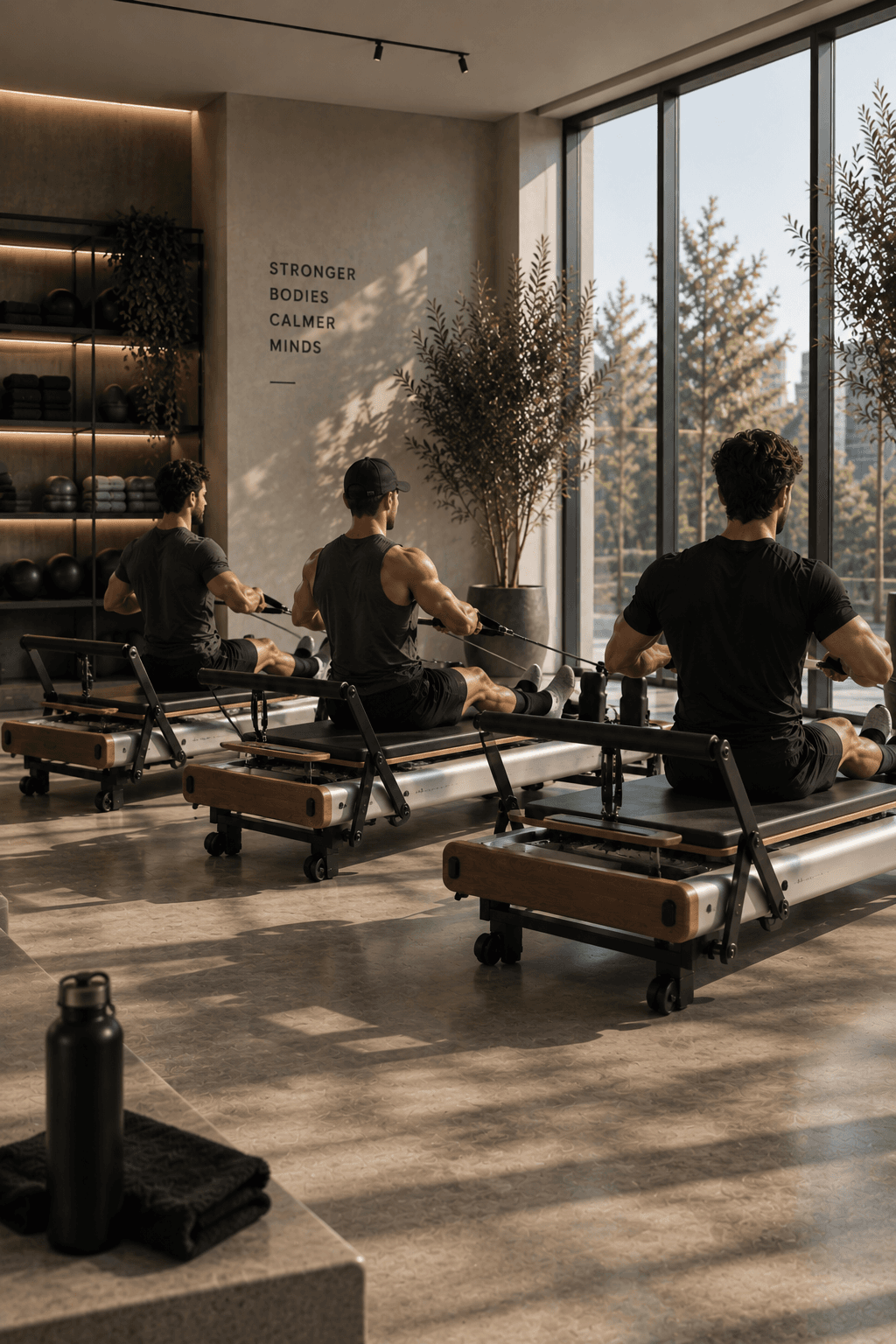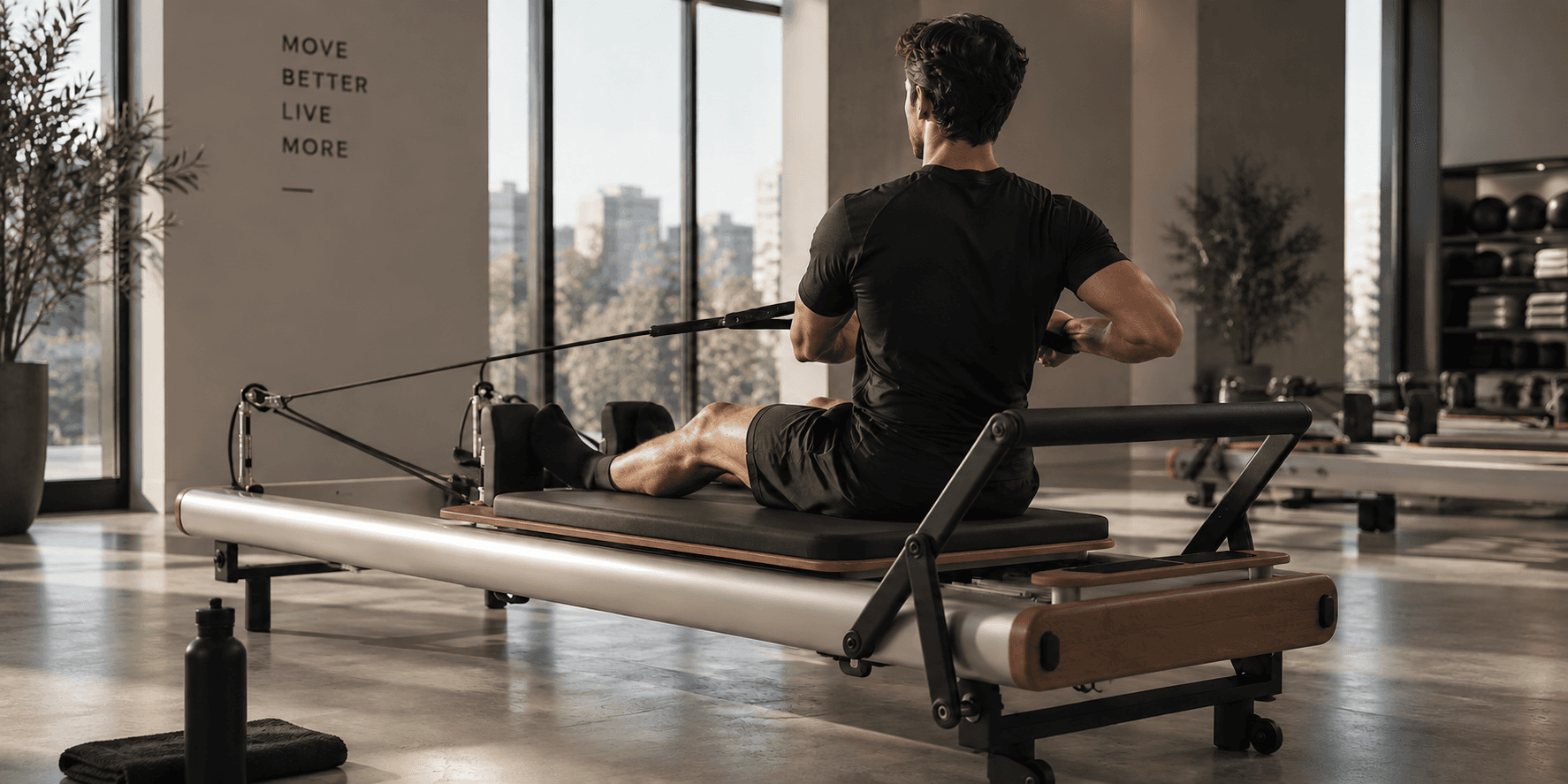
A lot of men avoid flexibility training because it's marketed as passive: long holds, quiet rooms, nothing to push against. Reformer Pilates is the opposite: every stretch happens under spring resistance, so you're building strength and range at the same time.
That combination matters. Flexibility gained under load tends to stick, because your nervous system trusts the new range instead of guarding against it. It's why reformer clients often see faster, more durable flexibility gains than from static stretching alone.
The result isn't just touching your toes. It's a body that moves the way it did ten years ago: fewer tight hips, less lower-back stiffness, and more range in the lifts and sports you actually care about.
Ready to feel it for yourself?
Find a men's-friendly reformer class near you.
Questions men ask about flexibility.
Straight answers to the most common questions about how reformer Pilates builds flexibility, so you know exactly what to expect before your first class.
No, that's the key difference. Every stretch happens under spring resistance, so you're building strength through the new range at the same time, which tends to make flexibility gains stick rather than fade.
Not at all, most men who start have below-average flexibility. Spring tension and instructor coaching are adjusted to wherever your current range is, there's no minimum flexibility requirement.
Static stretching and yoga are largely passive or bodyweight-based. Reformer flexibility work adds resistance through the stretch, which many men find builds trust in the new range faster because it feels like active training, not passive holding.
Many men feel looser immediately after a single session, more durable, lasting flexibility gains, like touching your toes or deeper hip rotation, typically build over 4 to 6 weeks of consistent training.
Yes, tight hamstrings are one of the most common complaints reformer flexibility work addresses, since exercises target hamstring length under control rather than a single static hold.
Yes. Muscles and joints that move through their full range under control are less likely to strain or tear under sudden load, which is why flexibility work is often paired with strength and sport training.
Yes, that's exactly who it's designed for. Instructors coach form and range from the ground up, spring resistance means you can't force a stretch too far the way you sometimes can unsupervised.
Yes. Deeper squats, safer overhead lifts and greater range in sport-specific movements all depend on flexibility, most men see these carry over directly once hip and shoulder range improves.
Two sessions a week is a strong baseline, even one weekly class produces noticeable improvement in range of motion compared to no dedicated flexibility work over a few months.
Yes, that's often the first thing men notice, less stiffness getting out of a car, tying shoes, or bending down, well before any performance-related gains show up.
It helps but isn't required. The resistance-based stretching in class builds durable range on its own, though light stretching between sessions can support the process, especially in the first few weeks.
More reasons men do Broformer