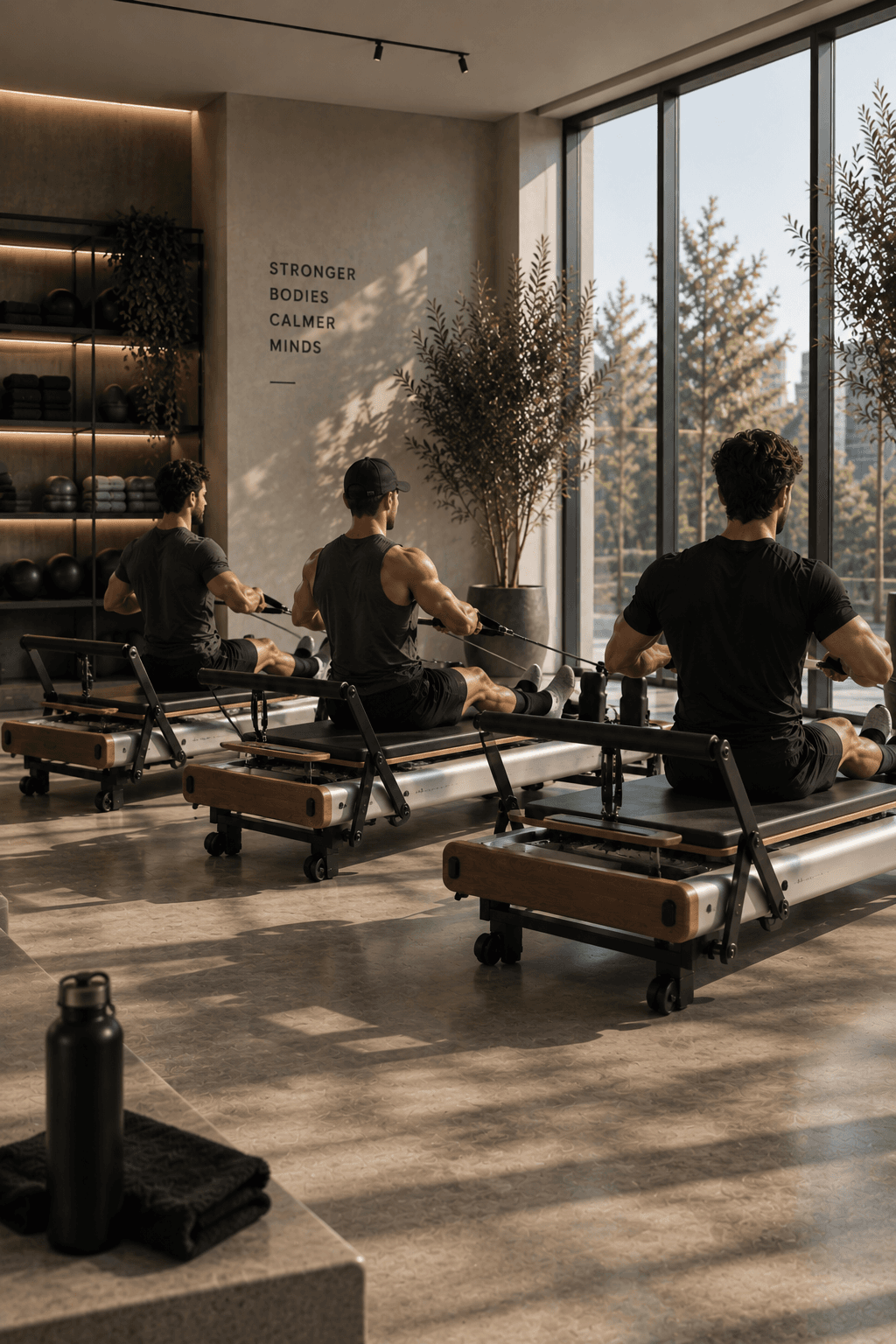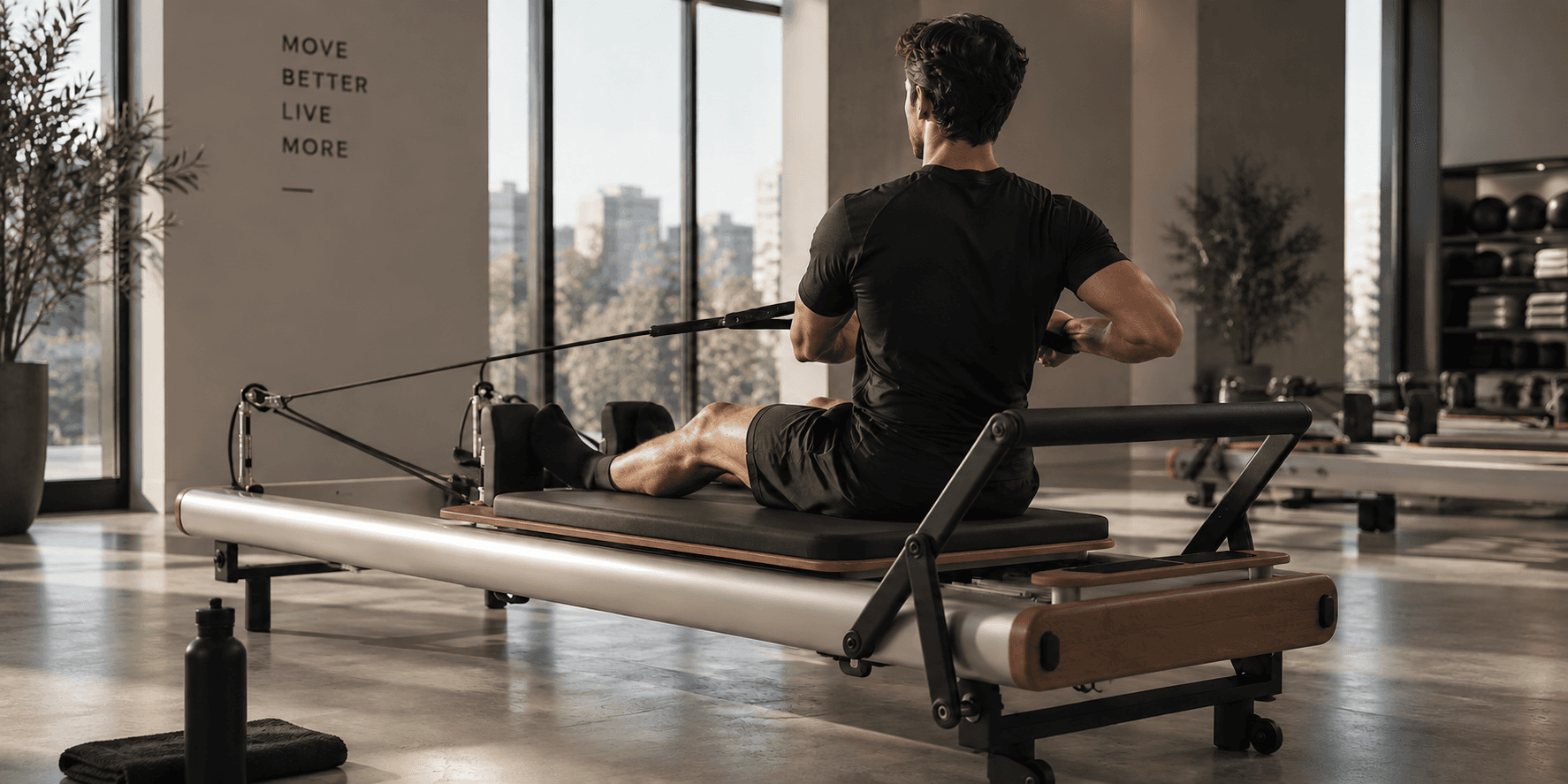
"Core strength" gets thrown around a lot, but reformer Pilates trains the part most programs miss: the deep stabilising muscles that hold your spine and pelvis steady while your arms and legs move independently. It's the difference between having visible abs and having a core that actually protects your back under load.
Nearly every reformer exercise demands this kind of control: moving a limb against resistance while keeping the trunk still. Over weeks, that builds a core that works automatically, not one you have to consciously brace before every set.
For men carrying lower-back tightness from sitting or heavy lifting, this is often the single biggest change reformer training makes: a spine that's supported from the inside, not just from bracing harder.
Ready to feel it for yourself?
Find a men's-friendly reformer class near you.
Questions men ask about core.
Straight answers to the most common questions about how reformer Pilates builds core, so you know exactly what to expect before your first class.
Very different. Crunches mostly train the surface abs in one direction, reformer exercises train the deep stabilising muscles that hold your spine and pelvis steady while your limbs move independently, which is what actually protects your back.
Visible abs come mainly from body fat percentage and diet, not any single exercise. What reformer training builds is a core that functions properly under load, which often shows up as a flatter, more controlled midsection over time.
Most lower back tightness comes from a core that isn't stabilising the spine properly, forcing your back muscles to overcompensate. Reformer training builds that missing stabilisation, which is why many men see back tightness ease within weeks.
No, spring resistance is adjusted to your level from day one. Beginners with weak or untrained cores often see the fastest improvement, since there's the most room to build.
Most men notice better control and less lower-back fatigue within 2 to 4 sessions, a core that stabilises automatically without conscious bracing typically takes 6 to 8 weeks of consistent training.
Yes, significantly. Nearly every athletic movement, from throwing to sprinting to lifting, relies on a stable core transferring force between your upper and lower body, which is exactly what reformer training conditions.
For most mild to moderate cases, yes, it's commonly recommended specifically because it builds support without heavy spinal loading. For anything acute or serious, check with a physio before starting.
A plank trains static bracing in one position. Reformer exercises train the core dynamically, while your arms and legs move against resistance, which is closer to how your core actually gets used in real life and sport.
Yes, they're closely linked. A weak core lets your pelvis and spine fall out of neutral position, reformer core work strengthens the muscles that hold you upright, which is a big part of why posture improves alongside core strength.
You don't need a separate core day, every reformer class trains it as part of the movement pattern. Two classes a week is enough to see steady core strength improvements over a few months.
Yes, desk sitting deactivates the deep core muscles over time, which contributes to back tightness and poor posture. Reformer training directly reactivates and strengthens exactly those muscles.
More reasons men do Broformer