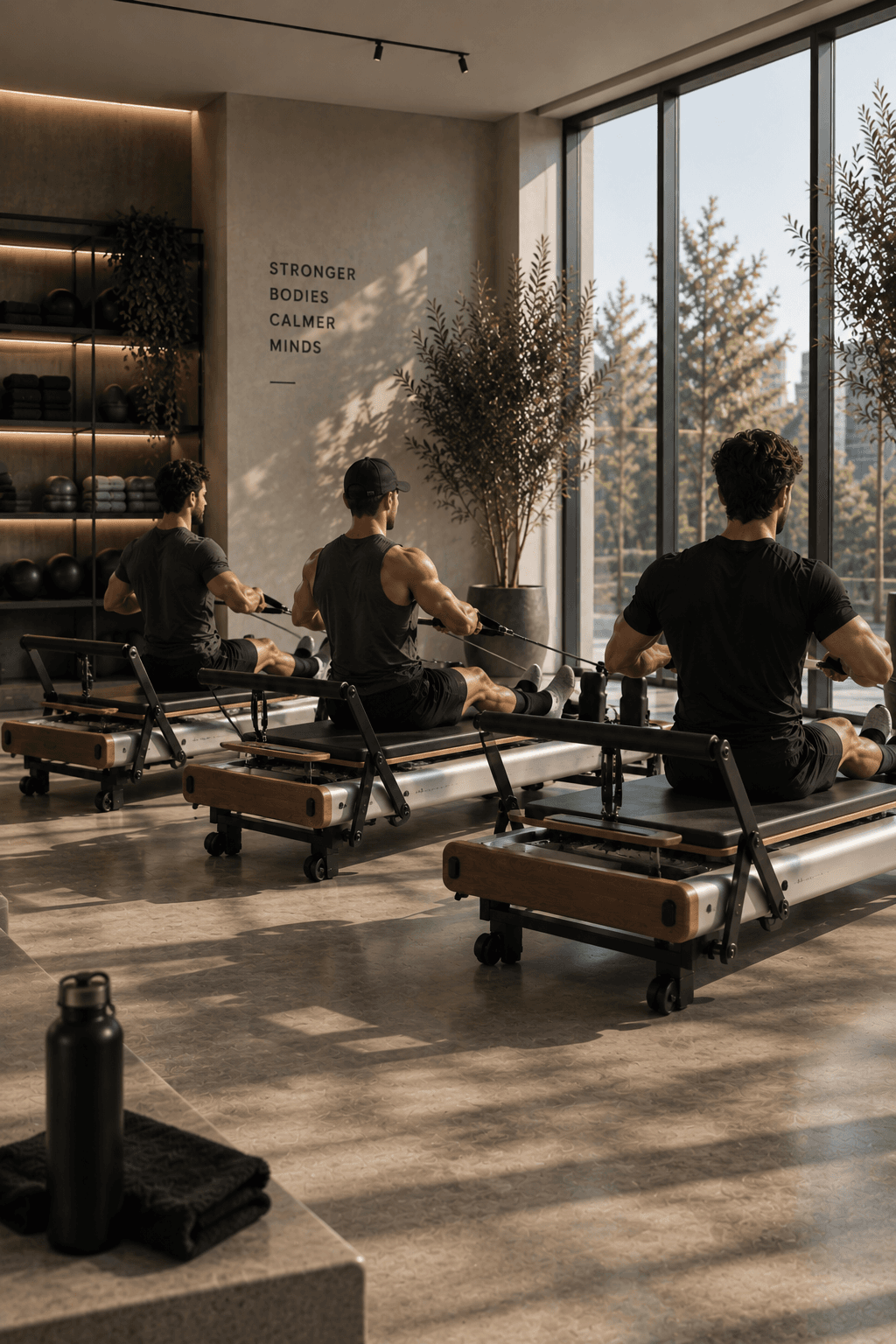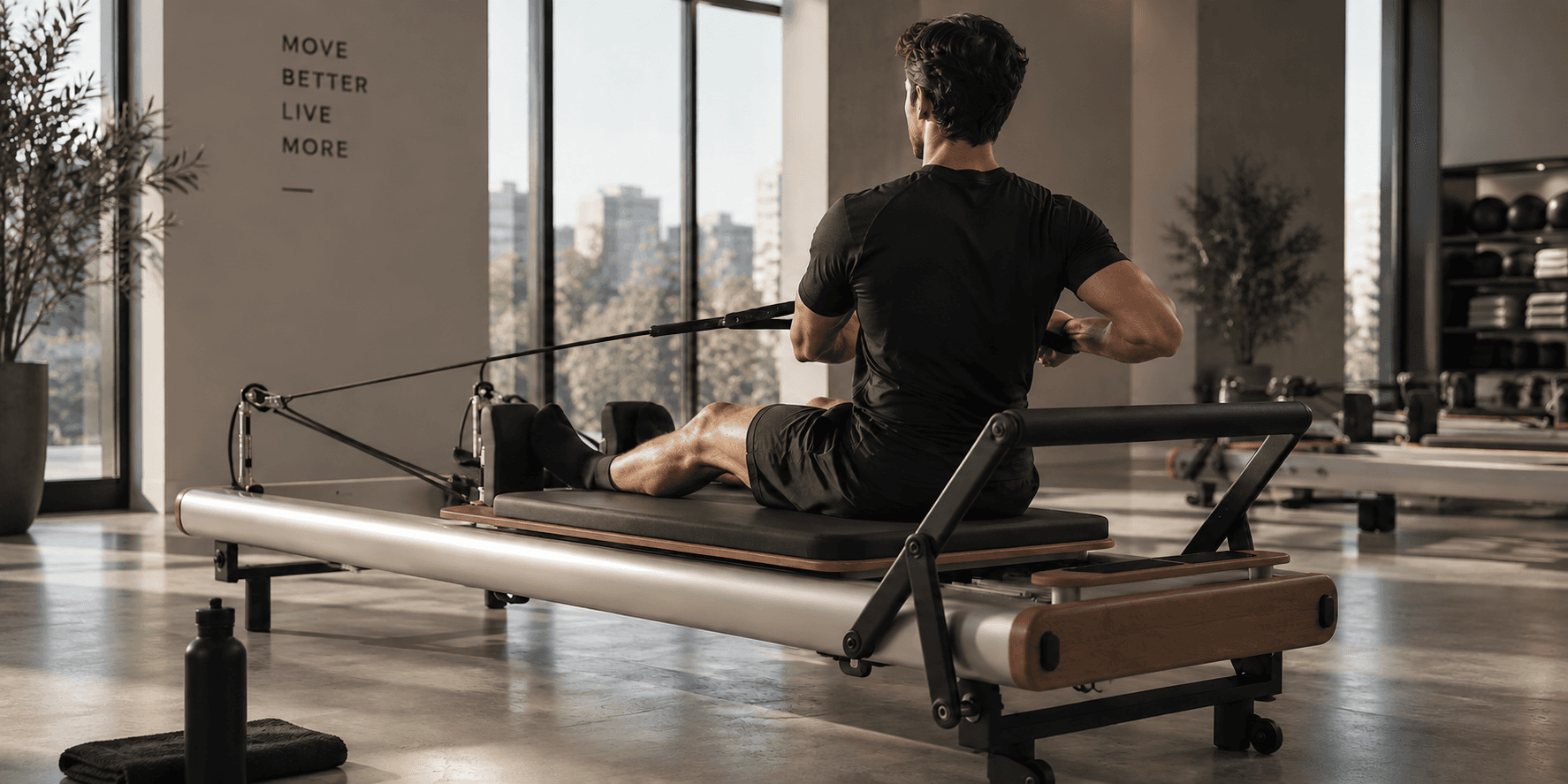
Poor posture usually isn't a flexibility problem. It's a strength problem. Years at a desk teach your body to round forward, and stretching the tight chest and hip flexors only gets you halfway there. The other half is strengthening the muscles that are supposed to hold you upright: your upper back, glutes and deep core.
Reformer Pilates trains that exact combination in a single session: pulling movements that build the upper-back strength most men are missing, alongside the core and hip work that keeps the pelvis in a neutral position instead of tilting forward.
Most clients notice the change before they see it: less end-of-day back and neck ache, a taller feeling walking out of a session, and better positioning under a barbell without having to consciously think about it.
Ready to feel it for yourself?
Find a men's-friendly reformer class near you.
Questions men ask about posture.
Straight answers to the most common questions about how reformer Pilates builds posture, so you know exactly what to expect before your first class.
Because poor posture is usually a strength problem, not just a tightness problem. Stretching a tight chest and hip flexors only solves half the issue, the other half is strengthening the upper back, glutes and core that are supposed to hold you upright.
For most men, yes. It trains the pulling and upper-back strength that desk work never uses, alongside the core and hip work that keeps your pelvis neutral instead of tilting forward from prolonged sitting.
Many men feel a difference, standing taller, less end-of-day slump, within the first few sessions, visible postural change typically builds over 6 to 8 weeks of consistent training.
Yes, that tension is usually linked to a rounded upper back and forward head position. Strengthening the upper back and shoulders through reformer training directly addresses the root cause, not just the symptom.
No, most men who start have some degree of desk-driven rounding or forward head posture, that's exactly the starting point reformer training is designed to correct.
More than that. It involves your upper back, glutes and deep core all working together, reformer training addresses all three simultaneously rather than isolating one area.
Yes, poor posture places uneven load on your spine over time, which contributes to chronic tightness and pain. Correcting the underlying strength imbalances through reformer training is one of the most direct ways to reduce that load.
Yes, better posture generally means a more stable, neutral spine position under a barbell, which most men find improves their positioning and control on lifts like squats and deadlifts without consciously thinking about it.
Two sessions a week is a solid starting point, since posture correction relies on building consistent strength over time rather than a single intensive session.
Reformer training does include controlled stretching as part of most exercises, but the core driver of posture correction is the strengthening work, stretching alone rarely fixes posture on its own.
Like any strength adaptation, posture gains rely on maintained strength, if training stops entirely for extended periods some regression is possible, which is why consistency matters more than any single block of sessions.
More reasons men do Broformer