Sport
Better performance, less risk and faster recovery for your sport.
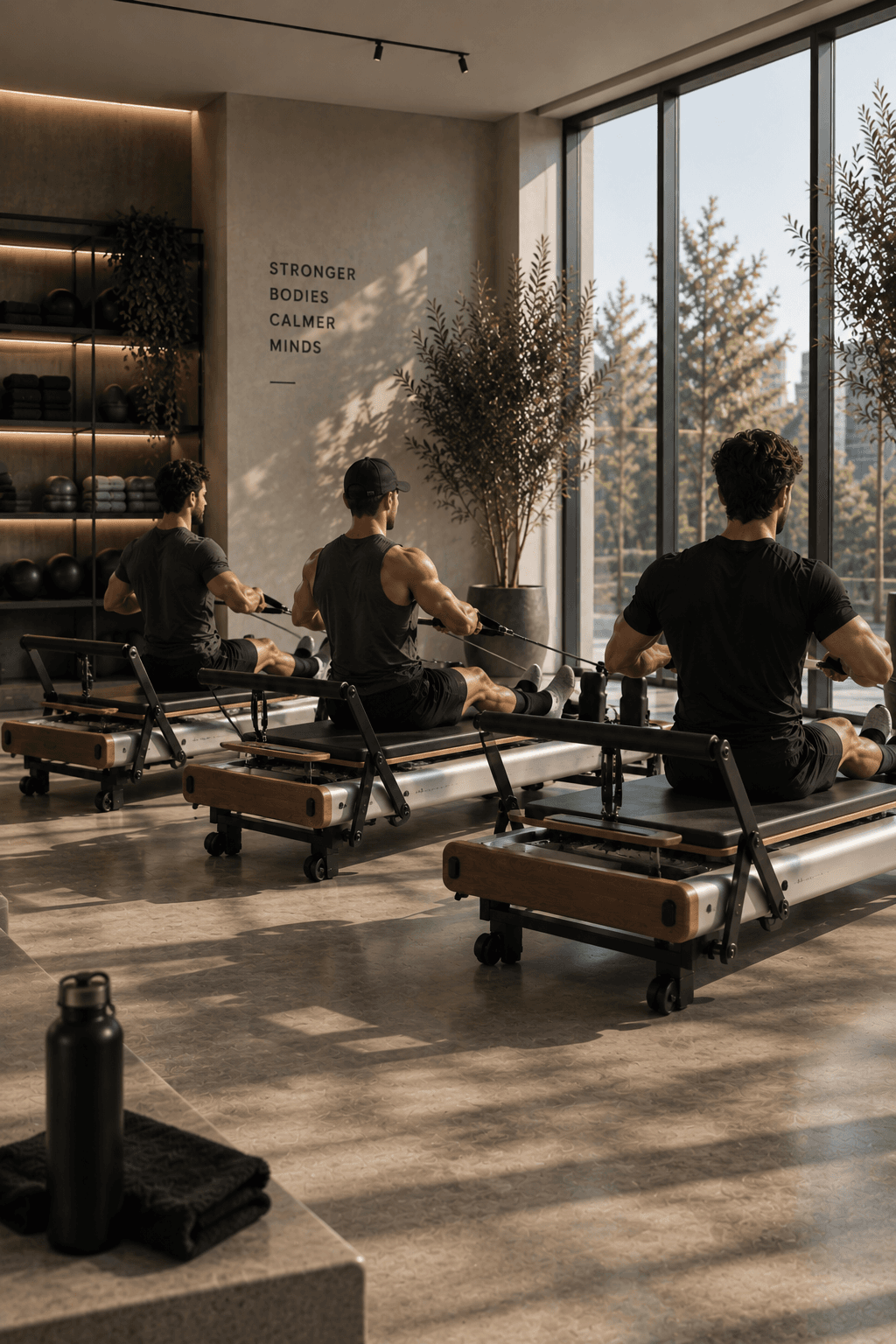
Most sports reward power and speed, and most training programs are built to chase both. What gets left behind is the control layer underneath: the hip stability, single-leg balance and rotational strength that keeps an athlete available, not just strong.
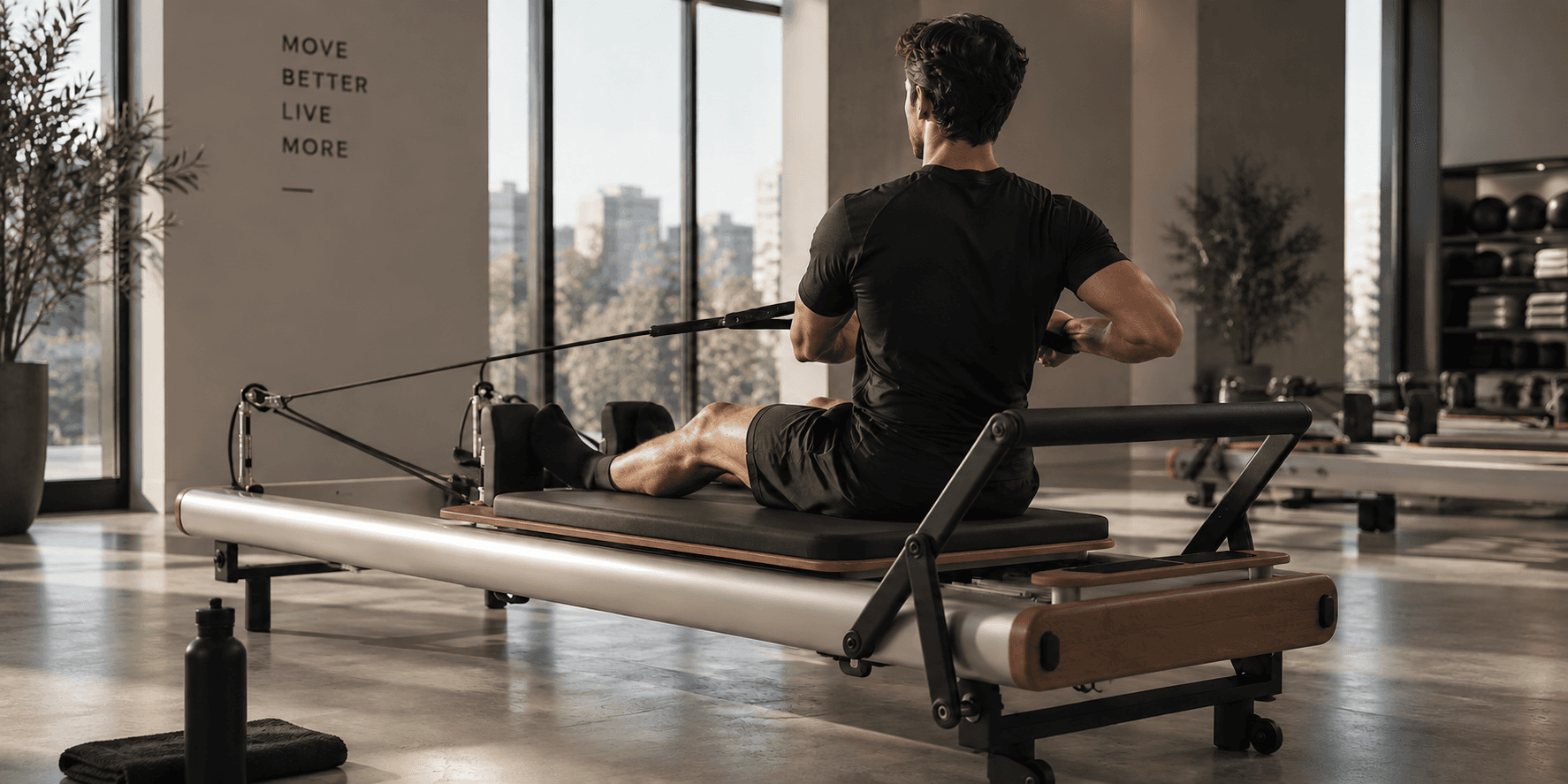
Reformer Pilates trains exactly that layer. It's why you'll increasingly find it in the programming for combat-sport athletes, footballers and weekend warriors alike: it builds the connective strength around joints that raw power training tends to skip.
The other benefit is recovery. The low-impact, high-control nature of reformer work makes it one of the few sessions you can genuinely do between hard training days, improving blood flow and mobility without adding fatigue.
Ready to feel it for yourself?
Find a men's-friendly reformer class near you.
Questions men ask about sport.
Straight answers to the most common questions about how reformer Pilates builds sport, so you know exactly what to expect before your first class.
Combat sports, football, running and any rotational sport (golf, tennis, throwing) see some of the biggest benefits, since reformer work targets the hip stability and rotational control those sports demand most.
No, it builds the stability layer underneath power, not a replacement for it. Athletes typically report their power output feels more controlled and consistent, not diminished, after adding reformer sessions.
Yes, this is one of the most common uses. The low-impact, high-control nature of reformer work improves blood flow and mobility without adding the fatigue a second hard session would.
It's one of its biggest benefits. Building hip stability, single-leg balance and rotational strength addresses exactly the weaknesses that lead to common sport injuries, like hamstring strains and ankle or knee instability.
One to two sessions a week alongside sport-specific training is a common baseline, timed on lighter training days or the day after a hard session so it supports recovery rather than adding load.
Yes, significantly. Many reformer exercises are single-limb by design, which directly trains the balance and stability that most sport-specific programs only address indirectly.
Yes, it's increasingly common in combat-sport programming. Hip mobility, core control and rotational strength are central to striking and grappling, and reformer work targets all three directly.
Often, yes. Sessions can be adjusted to focus resistance and control work around a specific joint, which is why many athletes use it to address a known weak point rather than as general conditioning.
No, when timed well it complements it. Because it's low-impact, it's typically scheduled on rest or lighter days so it adds recovery and stability benefits without competing with your main training load.
Many athletes notice better stability and control within 2 to 3 weeks, more measurable performance carryover, like improved balance under contact or deeper range in rotational movements, typically builds over 6 to 8 weeks.
Team sport athletes benefit just as much. Football, rugby and basketball all demand the same hip stability, core control and single-leg balance that reformer training builds, regardless of whether the sport is individual or team-based.
More reasons men do Broformer