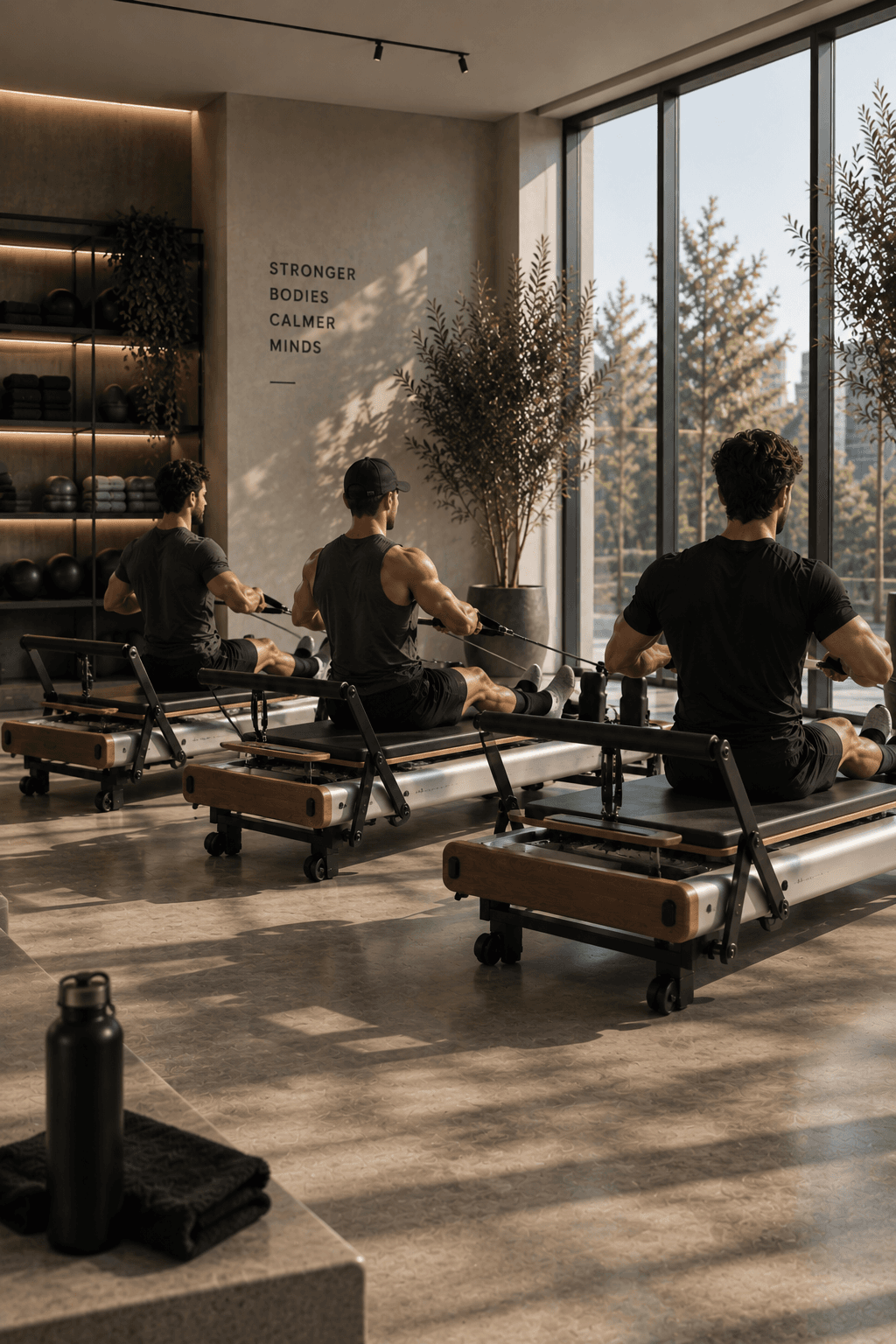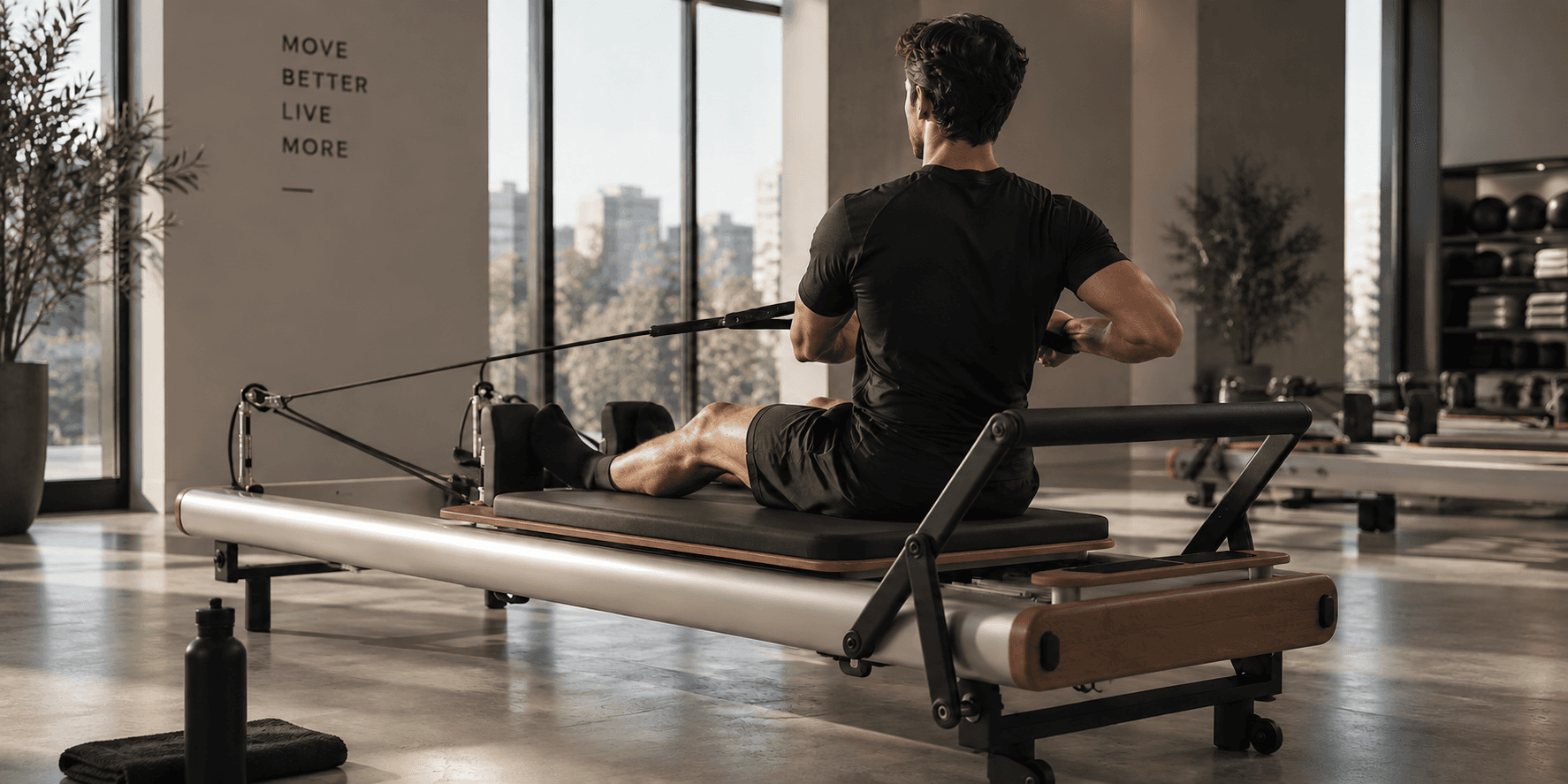
The training that keeps you strong at 30 isn't necessarily the training that keeps you independent at 70. Balance, joint control and the strength to get up off the floor without using your hands matter more over decades than one-rep maxes do, and they're rarely trained directly.
Reformer Pilates trains all three. The controlled, resistance-based movements build joint strength through full ranges of motion, while single-limb and balance-based exercises train the coordination that tends to fade first with age.
Men who start reformer training in their 30s and 40s aren't just training for how they feel now. They're building the base that keeps them moving well, and moving independently, decades from now.
Ready to feel it for yourself?
Find a men's-friendly reformer class near you.
Questions men ask about longevity.
Straight answers to the most common questions about how reformer Pilates builds longevity, so you know exactly what to expect before your first class.
Because it trains the three things that matter most for staying independent as you age, balance, joint control through full ranges, and functional strength, in a low-impact format that's sustainable for decades.
Earlier is better, many men start in their 30s and 40s specifically to build a foundation for later decades, but starting at any age still produces meaningful, measurable benefit.
Generally, yes, it's low-impact and fully adjustable by spring resistance, which is exactly why it's commonly recommended for older adults or anyone managing joint sensitivity. Check with a doctor for any specific condition.
Walking and cardio support cardiovascular health well, but they don't build the joint control, balance and functional strength that reformer training does, the two complement each other rather than compete.
Balance and single-limb coordination, both trained directly in reformer classes, are two of the strongest predictors of fall risk and mobility independence later in life, this is one of the most well-established longevity benefits.
Two sessions a week consistently over years matters far more than intensity, longevity benefits compound from sustained, moderate, low-impact training rather than occasional intense sessions.
Not necessarily, intensity is adjusted by spring tension and can be challenging at any age, the focus is on sustainable, joint-friendly movement patterns rather than simply lowering effort.
It builds meaningful strength on its own, and many men use it as their primary training as they age, others pair it with lighter weight training for a complete approach, both are valid depending on your goals.
Building the strength to get up off the floor without using your hands, and maintaining single-leg balance, both are frequently cited as key predictors of independence and quality of life in later decades.
Yes, joint control, balance and functional strength can all still be built later in life, the training adapts to your current ability, starting later still produces real, measurable benefit.
General fitness often prioritises how you look or perform now, longevity training on a reformer prioritises how well you move, balance and function decades from now, the exercises overlap but the long-term focus is different.
More reasons men do Broformer